Step 1 — Measure Correctly
A well-fitting suit starts with accurate measurements. Use a soft tape measure, keep it snug (not tight), and take the numbers in centimetres for consistency.
- Shoulder — across the back, from shoulder bone to shoulder bone.
- Chest — around the fullest part, arms relaxed at your sides.
- Waist — around the natural waistline, one finger loose.
- Sleeve — from shoulder point to the wrist bone, arm slightly bent.
- Hips & thigh — around the fullest points.
- Jacket & pants length — jacket covering the seat; trousers with a slight break at the shoe.
- Height & weight — always useful for pattern grading.
The golden rule: measure the body, not an old garment — and when in doubt, ask a tailor. A suit made from body measurements will always look better than one made from a guess.
Want us to make your suit from your measurements? Fill them in and send them straight to our factory team on WhatsApp.
Step 2 — Choose the Right Fabric
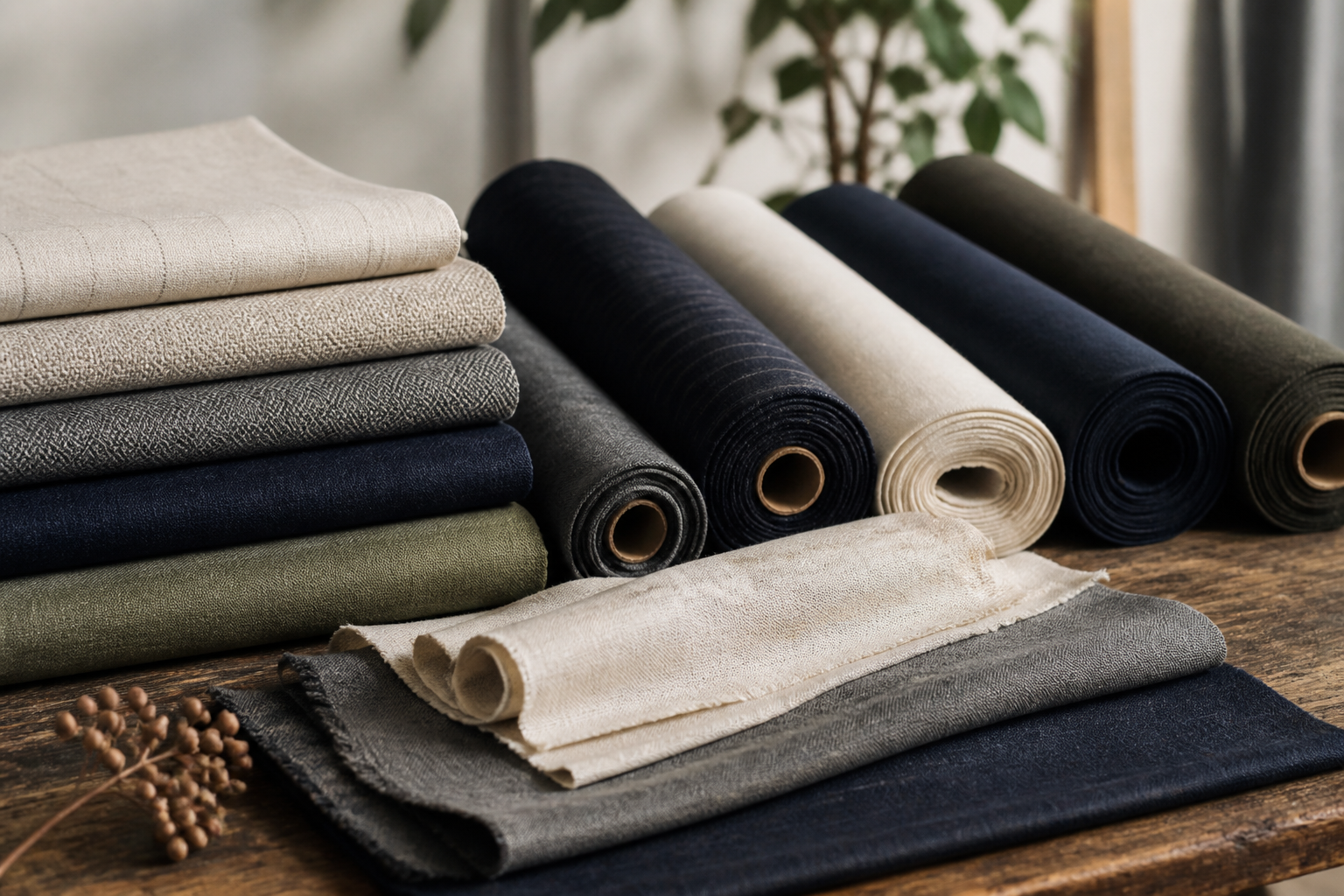
Fabric decides how the suit drapes, breathes and lasts. Match it to your climate and how often you will wear it:
- Wool — the all-rounder. Drapes well, resists wrinkles, works in every season. Most suits should be wool.
- Linen — light and breathable, perfect for summer and warm climates. Wrinkles easily — that is part of its charm.
- Cotton — casual and comfortable, best for relaxed blazers rather than formal suits.
- Blends — wool-linen for warmer weather, wool-polyester for durability and easy care.
As a rule: higher wool content = better drape and comfort. For a first suit, a mid-weight pure wool in navy or charcoal is the safest, most versatile choice.